ou can visit for free and watch the professionals work to treat sick and injured animals.
By Gabi De la Rosa,Special to Chron Updated June 21, 2023 2:59 p.m.
The Texas State Aquarium has added another major reason to drive to Corpus Christi and pay it a visit. The aquarium is already one of the most visited attractions in South Texas and home to more than 400 species of animals from the Gulf Coast and the Caribbean, including sharks, dolphins, fish, reptiles, otters and sloths. In addition to being the biggest aquarium in the state, the institution can now boast that it has Texas’s largest coastal wildlife rescue facility.
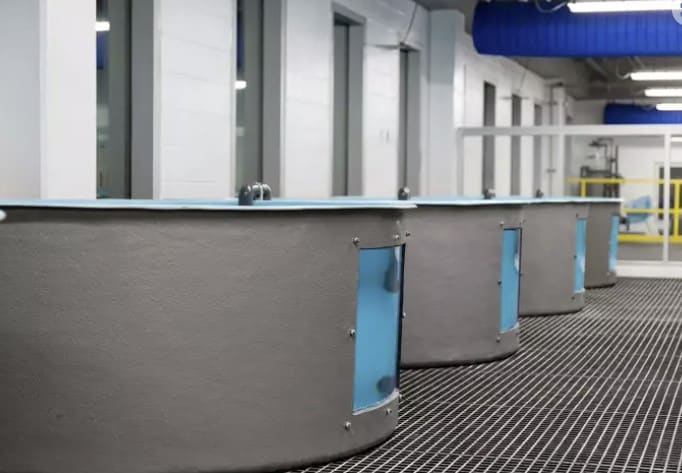
In March, the 26,000-square-foot Port of Corpus Christi Center for Wildlife Rescue opened its doors on Texas State Aquarium’s main campus. The new rescue center is a significant upgrade from the previous 5,000-square-foot facility and can now simultaneously accommodate thousands of animals that need medical care.
Nearly five years in the making, the state-of-the-art medical facility cost an estimated $16 million and is outfitted with the only wildlife-dedicated CT scan equipment in the state and an emergency operations center equipped to handle animals injured in large-scale disasters including hurricanes or severe cold spells. The Texas State Aquarium rescue center can also house up to 4,000 sea turtles at once, according to what aquarium CEO Jesse Gilbert told Texas Public Radio.
“The building is breathtaking, but when people walk in and see the turtle hospital, the patients that are in there for different reasons, they see the CAT scanner, the surgery center, and, if they are lucky enough to be there when the vets are actually doing a CAT scan — they are kind of shocked that this type of resource exists for wildlife,” Gilbert told Chron. “I have taken very seasoned scientists on tours and when we walk up to the CAT room, they are blown away.”
Gilbert also says the Center for Wildlife Rescue’s nature, as a site dedicated to helping creatures in crisis, makes it an unpredictable place for visitors.
“If an emergency happens, visiting the rescue center the next day could be a whole new experience,” he said.
Gilbert encourages visitors to come by every day to see their favorite patients and hopes they will also be there when the animals are released back into the wild.
Why Corpus Christi is a hotbed for wildlife
Since opening in 1990 after decades of fundraising, the Texas State Aquarium has made animal rescue and rehabilitation a major part of its mission. According to Gilbert, Corpus Christi and Coastal Bend are situated in a vibrant environment for wildlife, including several endangered species. The area is a nesting ground for the world’s most endangered sea turtle species, the Kemp’s Ridley sea turtle. Manatees, an endangered mammal often seen around Florida, are also starting to move into the area in more significant numbers. In addition, several bird species use the area as a flyway during their seasonal migration.
Gilbert emphasizes that, for many of these endangered species, every individual creature matters, making the services the new Center for Wildlife Rescue provides even more essential. Prior to 2017, the aquarium’s rescue center would see between 300–350 animals in need each year, but Gilbert says ever-changing and more severe weather patterns have increased that number significantly.
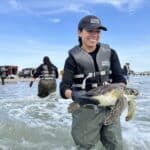
“Ever since Hurricane Harvey, we see dynamic pulses in the program,” he said. “What we have prepared for is to accommodate these large spikes in the number of animals that may need help. The wildlife rescue center is being used for large-scale disaster response almost annually.
In addition to the medical facility, the Port of Corpus Christi Center for Wildlife Rescue has interpretive exhibits that are open to the public and free to check out. Gilbert says it was important for the Texas State Aquarium to highlight how humans impact wildlife and the perils animals face, whether it be the entanglements of sea turtles and dolphins in nets, or birds becoming wrapped in fishing line. All the exhibits are interactive and culminate with a walk through the center, where visitors can see animals recovering from injuries that are often caused by human activities.
Source
https://www.chron.com/life/travel/article/texas-state-aquarium-18073391.php